Doors, Drops and Downpours: Choosing the Right Van Rear for Real Work
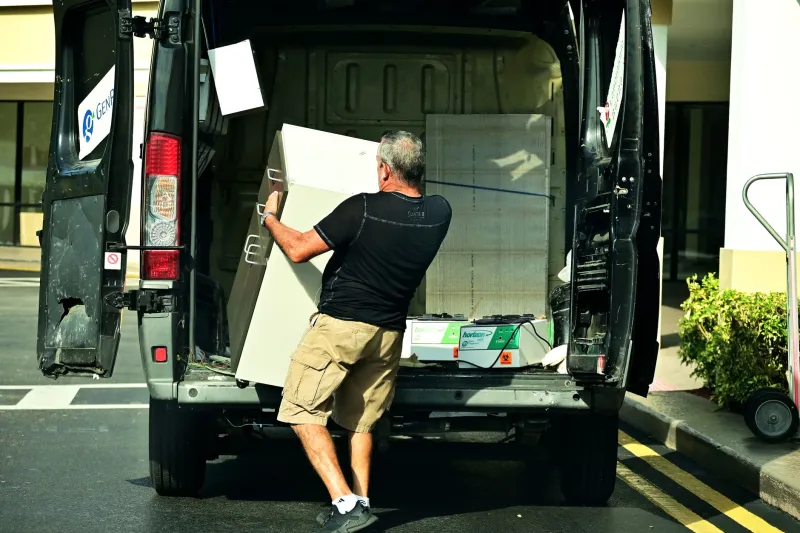
Walk down any builders' merchant forecourt and you will see the same split: some drivers swinging a tailgate up into the air, others flinging open a pair of rear doors. Both vans do the same basic job. The difference is in the daily grind — the loading bay, the tight street, the sudden downpour, the tools left inside overnight.
If you are buying a van in 2026, the rear layout deserves more than a glance at the brochure. It is one of those choices that seems minor at the dealer and becomes very obvious by the second week of ownership.
Why the rear end matters more than you think
A van is a working tool, and most of the work happens at the back. You are not just choosing between a hatch and a pair of doors. You are choosing how much shelter you get while loading, how far you have to stand from a wall, how easy it is to reach a pallet, and how much of your kit is on display to passing eyes.
For some trades, either layout works fine. For others, the wrong choice becomes a daily annoyance — or a genuine security problem.
Tailgate vans: the mobile workshop with a roof
The big advantage of a tailgate is shelter. Lift it up on a wet Tuesday morning and you have a temporary canopy over the back of the van. That matters if you are sorting small parts, wrapping a customer's item, or trying to keep a laptop and paperwork dry while you find the right box.
Tailgates also tend to give a wide, unobstructed opening. If you load long lengths, flat-pack furniture, or anything that needs to slide in cleanly, a tailgate can feel more like a small covered loading area than a van aperture. Some drivers find it easier to stand close to the bumper and reach deep into the load bay.
There are trade-offs, though. A raised tailgate needs vertical clearance. Multi-storey car parks, low canopy loading bays, and some underground delivery areas can turn a simple reverse into a geometry lesson. You also need space behind the van to stand while the gate is up — not always available on a narrow residential street.
And then there is the rain. A tailgate protects you from above, but it does not stop sideways drizzle blowing in. It also does not give you the same flexible access as two doors that can open just a little or wide open depending on the gap.
Twin rear doors: flexible, compact, and very familiar
Twin doors are the default for a reason. They open outward, so they do not need the same overhead clearance as a tailgate. On a tight street or in a low-roof loading bay, that can be the difference between getting the van close to the kerb and giving up entirely.
They also let you open one side only. If you are parked against a wall, you can often use the free side and keep the other door shut. That sounds trivial until you are delivering to a terraced house with a skip outside and a hedge on the other side.
Most twin-door vans also have check straps or stays that hold the doors at a set angle. Some open to roughly 90 degrees, others closer to 180 degrees. If you regularly load pallets with a forklift, the wider opening is worth checking carefully. A pair of doors that only opens to 90 degrees can make a big difference to a pallet truck or a bulky appliance.
Security is a mixed picture. Twin doors give more potential entry points, but they also let you keep the rear closed while using a side door. A tailgate can sometimes hide what is inside from the rear until it is lifted, but once it is up, the whole load bay is on show. Neither layout is a substitute for deadlocks, internal racking and a bit of common sense.
Match the rear to the cargo, not the brochure
A simple way to decide is to think about what you carry most often.
- Long lengths and flat goods: A tailgate often wins. The wide opening and overhead shelter make it easier to slide timber, pipe, or sheet material in without wrestling with door checks.
- Pallets and bulky boxes: Twin doors are usually more practical, especially if you need forklift access. Check how far they open before you commit.
- Small parts and tools: Either works, but twin doors give more flexibility in tight spots. A tailgate is nicer in the rain if you have clearance.
- Deliveries in built-up areas: Twin doors tend to be friendlier to terraced streets, low canopies and multi-storeys.
- Customer-facing work: A tailgate can feel a bit more protected and professional when you are unloading in a driveway. Twin doors are quicker to open and close when you are in a hurry.
The weather test
UK weather is not a minor detail. If you work outside year-round, imagine opening the back of your van in horizontal rain. A tailgate gives you a roof, but you still get wet from the sides. Twin doors give you less shelter, but you can open just one and keep the other closed.
If you often load in the rain, a tailgate with a decent-sized canopy can be a real comfort. If you often park in exposed places with wind, twin doors may actually be less annoying because you are not holding onto a large wet panel or trying to stop it swinging.
Security and resale
On security, the layout matters less than the locks. A tailgate with a flimsy latch is no better than twin doors with poor locks. Look for deadlocks, anti-drill plates, and internal bulkheads or lockers. If you carry expensive tools, factor in the cost of extra security whatever rear end you choose.
On resale, twin doors are generally the safer bet for a typical UK work van. They are familiar, flexible and easy to live with. Tailgates have a loyal following — especially among drivers who value the shelter — but they can narrow your buyer pool slightly. If you plan to sell in a few years, a clean, well-specced twin-door van will usually be easier to move on.
That said, don't buy for the next owner. Buy for the work you do now. A tailgate that makes your daily loading easier is worth more than a theoretical resale advantage.
A dealer-yard checklist
Before you commit, test the rear end properly. Open and close it several times. Check the height of the tailgate when raised. Stand behind the van as if you were loading a heavy box. Ask yourself where you would put your feet. If it is raining, where does the water go?
For twin doors, check the opening angle. Can you get a pallet truck in? Can you open one door with the van close to a wall? Do the doors have stays that hold them open, or will they swing back at the first gust?
Look at the sill height too. A low loading lip saves your back. A high one turns every box into a lift. And check the internal width between the wheel arches — it is no good having a wide door if the load bay itself is tight.
Finally, think about your routine. If you are loading at a merchant with a forklift, ask how the driver expects to approach the van. If you are delivering to houses, think about driveways and narrow streets. The best rear end is the one that fits the places you actually park.
The verdict
There is no universal winner. Twin doors are the sensible all-rounder for most UK trades, especially if you work in towns and cities. Tailgates suit drivers who value shelter and wide, unobstructed loading, and who have the clearance to use them.
Spend ten minutes testing the back of the van as carefully as you test the driver's seat. It is the part you will use every single day — and the one most likely to shape how easy, or awkward, your working day feels.